Choosing a crypto exchange shouldn’t feel like rolling dice with your money. Yet with every platform claiming “lowest fees” and “best security,” it’s hard to know who actually deserves your deposits.
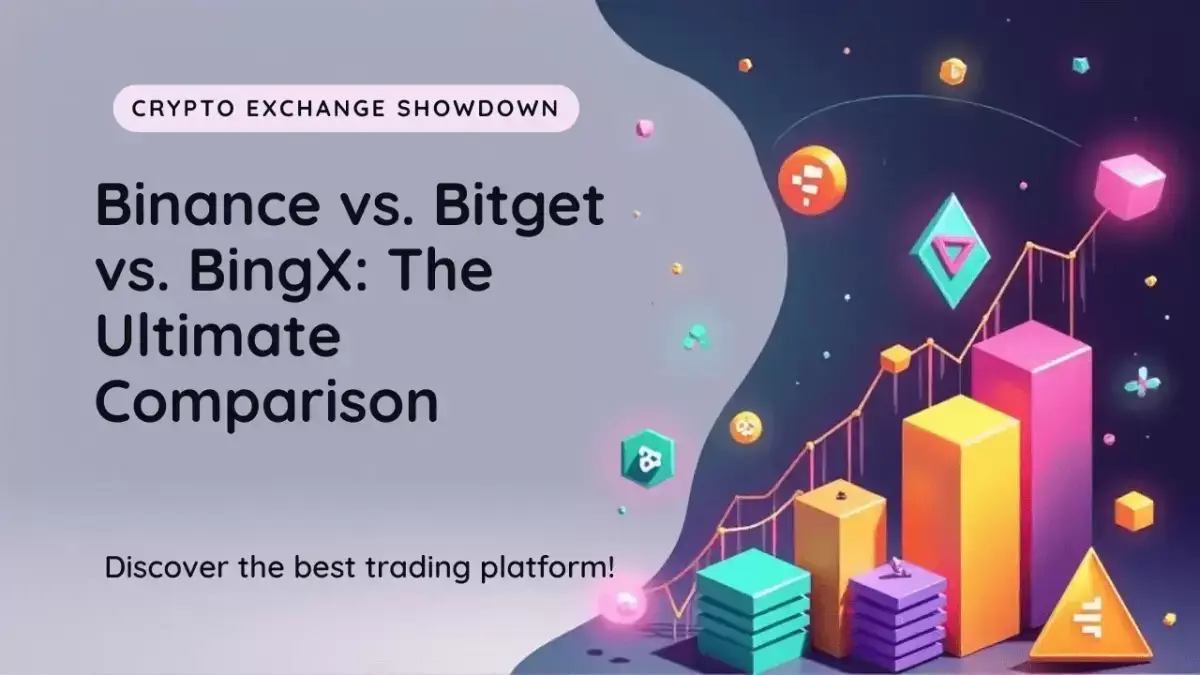
So when it comes down to Binance vs Bitget vs BingX — which one really fits your trading style?
? Want the Best Exchange for Your Trading Style?
Before diving into the comparison, here are the top exchanges our community uses — with fee discounts & bonuses when you join through Airdropbuzz:
- Binance – Most Powerful All-Round Exchange: Sign up on Binance
- Bitget – #1 Copy Trading Platform: Join Bitget Copy Trading
- BingX – Best for Altcoins & Social Trading: Start on BingX
⚡ Pick your platform — trade smarter from your very first deposit.
The crypto market is full of opportunities, but your first real decision isn’t what to buy—it’s where to trade. The exchange you choose determines your fees, available coins, leverage options, copy trading tools, and even how safe your funds are.
Three platforms dominate the conversation for active traders and social investors: Binance, Bitget, and BingX. Each has a different strength—one is a liquidity giant, one is a copy trading beast, and one is an altcoin hunter’s playground.
This guide breaks them down in plain language so you can pick the exchange that actually matches your goals—not just the one with the loudest marketing.
Key Takeaways at a Glance
- Binance: Best all-rounder with huge liquidity, deep futures markets, and a complete ecosystem (Earn, Launchpad, bots, etc.).
- Bitget: The clear leader in copy trading, with a massive pool of elite traders and transparent stats.
- BingX: Strong social trading + altcoin discovery, with one of the largest selections of coins.
High-Level Exchange Snapshot
| Feature | Binance | Bitget | BingX |
| Best For | All-Round Trading & Liquidity | Copy Trading & Derivatives | Altcoin Discovery & Social Trading |
| Standard Spot Fee | 0.1% / 0.1% | 0.1% / 0.1% | 0.1% / 0.1% |
| Native Token Discount | Yes (BNB) | Yes (BGB) | No |
| Supported Coins | ~600+ | ~700+ | ~900+ |
| US Availability | Limited (Binance.US) | No | No |
| Copy Trading | Yes (Developing) | Yes (Market Leader) | Yes (Strong Focus) |
| Security Fund | SAFU Fund (~$1B) | Protection Fund (~$700M+) | Yes (Insurance Mentioned) |
The Cost of Trading: Fees, Spreads & Hidden Costs
On the surface, Binance, Bitget, and BingX all look similar: 0.1% spot fees, competitive futures fees, and bonus discounts. But the real cost of trading also includes spreads, funding, credit card fees, and withdrawal costs.
Headline Fees: Spot & Futures
- Binance: Spot 0.1% / 0.1%, Futures 0.02% (maker) / 0.04% (taker)
- Bitget: Spot 0.1% / 0.1%, Futures 0.02% (maker) / 0.06% (taker)
- BingX: Spot 0.1% / 0.1%, Futures 0.02% (maker) / 0.05% (taker)
At first glance, they’re very close. The main difference shows up when you factor in native token discounts and how often you trade.
The Real Killers: Spreads & On-Ramps
For many beginners, the biggest cost isn’t trading fees—it’s the premium baked into quick-buy and credit card options:
- “Buy Crypto” / “Quick Buy” tools often include a 2–4% spread above market price.
- Third-party processors (Simplex, Banxa, Mercuryo, etc.) stack another ~1% fee.
- Withdrawing via expensive networks (like ERC20 USDT) can cost more than your actual trading fees.
Example: Buying $1,000 of crypto via card could quietly cost you $30–$40 in spread + fees, compared to around $1 using the spot market with a 0.1% fee. If you’re aiming to trade efficiently, you’ll want to move away from instant-buy as early as possible.
BNB & BGB: Native Token Discounts
Binance and Bitget both use their native tokens as loyalty tools:
- BNB on Binance: Up to 25% discount on trading fees.
- BGB on Bitget: Up to 20% discount on trading fees.
- BingX: No native token discount mechanism for fees.
If you’re an active trader, even a 10–25% discount makes a meaningful difference over months and years.
Feature Face-Off: Copy Trading, Futures & Bots
Once you get past fees, the real question becomes: What can I actually do on this exchange?
Copy Trading: Socializing Profit
Copy trading turns trading into a social experience—perfect for beginners who want to piggyback on experienced traders, and for pros who want to monetize their strategies.
- Bitget – Copy Trading Champion: Bitget is widely known as the market leader, with over 130,000 elite traders and hundreds of thousands of followers. You get detailed performance stats, risk profiles, and profit-sharing up to 20% for lead traders.
- BingX – Social Trading Challenger: BingX leans hard into social trading, with 17,000+ elite traders and a beginner-friendly layout that makes it easy to browse and follow top performers.
- Binance – Late but Strong: Binance’s native copy trading is newer but plugged into the largest ecosystem. You can copy both spot and futures strategies with profit share for lead traders, though the feature is still expanding by region.
| Feature | Binance | Bitget | BingX |
| Platform Maturity | Developing | Market Leader | Strong Focus |
| Elite Traders (Approx.) | Growing | 130,000+ | 17,000+ |
| Profit-Sharing Rate | ~10% | Up to 20% | Varies |
| Spot Copy Trading | Yes | Yes | Yes |
| Futures Copy Trading | Yes | Yes (Primary Focus) | Yes (Primary Focus) |
? Ready to Start Trading Smarter?
Pick the exchange that matches your trading style and start with fee discounts and bonuses using the links below:
- Binance – All-Round Liquidity & Ecosystem: Join Binance with Airdropbuzz
- Bitget – Copy Trading & Derivatives Leader: Join Bitget with Airdropbuzz
- BingX – Altcoin & Social Trading Challenger: Join BingX with Airdropbuzz
Use these links to access exclusive rewards, fee discounts, and promos curated for the Airdropbuzz community.
Futures & Derivatives: The High-Stakes Playground
All three platforms offer advanced derivatives markets with leverage, multiple margin types, and a variety of contract structures.
- Binance: The king of liquidity. Ideal for high-volume futures traders who care about deep order books and minimal slippage.
- Bitget: Built its reputation on derivatives first, then copy trading. It’s a strong fit if your main game is futures.
- BingX: Offers up to 125x leverage and integrates copy trading directly into its futures environment, making it easy for followers to jump into advanced markets.
Automated Trading Bots
Automated bots have gone from “pro-only” to one-click tools.
- Binance & Bitget: Both support Spot Grid, Futures Grid, and Auto-Invest/DCA bots. Interfaces are polished and beginner-friendly, but still offer solid customization.
- BingX: Provides grid bots for spot and futures as well. Slightly fewer options and settings, but easy to use for beginners.
If you want fine-grained control, you can still connect third-party bot platforms using API keys, but for 90% of users the built-in bots are more than enough.
Security & Trust: Fort Knox or Swiss Cheese?
After high-profile collapses, “trust me bro” is no longer good enough. Serious exchanges now show proof.
Proof of Reserves (PoR)
- Binance: Uses Merkle Tree and zk-SNARK-based PoR, with regular reports users can verify on-chain.
- Bitget: Publishes PoR with >100% reserves and open-source verification tools.
- BingX: Offers PoR data and previously worked with third-party auditors, but consistency of external audits is less clear.
User Protection Funds
- Binance SAFU: A dedicated emergency fund worth around $1B, designed to protect users in extreme events.
- Bitget Protection Fund: A large, transparent fund (hundreds of millions) denominated in BTC, USDT, and USDC.
- BingX Insurance: Lists “funds insurance,” but without the same level of transparent detail as Binance and Bitget.
Regulation & Licensing
- Binance: Licensed in multiple regions globally, but also heavily restricted in some countries. US users are pushed to Binance.US with a limited feature set.
- Bitget: Based in Seychelles with licensing in the EU (Lithuania) and strict geoblocking for certain countries, including the US.
- BingX: Holds regulatory registrations in markets like Lithuania and Australia but is restricted in several major jurisdictions such as the US and UK.
Asset Diversity: Coins & Fiat Access
Crypto Selection
- BingX: ~900+ supported coins – strongest choice for altcoin hunters.
- Bitget: ~700+ coins – lots of early and mid-cap listings.
- Binance: ~600+ coins – fewer listings than some rivals, but generally more curated.
Challenger exchanges like BingX and Bitget often list new or niche coins before Binance, which attracts speculative traders who want exposure early. Binance tends to move slower but with stricter due diligence.
Fiat Currency Support
- Binance: Supports 80+ fiat currencies through P2P, bank transfers, and card payments.
- BingX: Supports dozens of fiat currencies with integrated third-party providers.
- Bitget: Supports a smaller but focused set of fiat currencies, often paired with strong P2P options.
User Experience & Customer Support
User Interface & Learning Curve
- Binance: Feature-rich but intimidating at first. “Lite” mode on mobile is perfect for beginners, while “Pro” mode is a playground for advanced traders.
- Bitget: Strikes a great balance: powerful enough for derivatives traders but cleaner and easier to navigate than Binance.
- BingX: Very beginner-friendly layout that fits especially well for users starting with copy trading and simple spot/futures trades.
Customer Support
- Binance: Heavy use of AI chat and ticket systems. Helpful for basic issues but can be slow or frustrating for complex cases.
- Bitget: Generally seen as more responsive and supportive, especially across multilingual regions.
- BingX: Offers 24/7 chat on paper, but user reports frequently complain about slow or unhelpful responses for serious account or P2P issues.
Final Verdict: Which Exchange Should You Use?
For the All-Round Power User: Binance
If you want the most complete crypto ecosystem—spot, futures, options, launchpads, staking, and bots—Binance is hard to beat. It’s especially strong for high-volume traders who care about liquidity and tight spreads.
For the Copy Trading & Social Futures Trader: Bitget
If your main interest is copy trading or if you want to grow as a strategy provider, Bitget is the best fit. The platform’s copy trading ecosystem is more mature, transparent, and larger than its competitors.
For the Altcoin Hunter & Social Trader: BingX
If you love discovering new coins before they hit big-name exchanges and want social features built into your trading flow, BingX is very appealing. Just be aware of the mixed reputation around support and slightly less transparent security communications compared to Binance and Bitget.
For Ultra-Conservative Beginners: Honorable Mentions
If you value regulation and simplicity above all else, exchanges like Kraken and Coinbase are worth considering. You’ll usually pay higher fees and get fewer features, but you trade that off for a stronger compliance-first reputation.
At the end of the day, there is no single “best” crypto exchange—only the one that best fits your trading style, risk tolerance, and region. Many experienced traders actually use two or three exchanges in parallel: one for copy trading, one for altcoins, and one for liquidity.
FAQ
Is Bitget better than Binance for beginners?
For total beginners, Bitget can feel more approachable than Binance thanks to its cleaner interface and focus on copy trading. If you want the deepest feature set long term, Binance is stronger—but it’s also more complex at first glance.
Which exchange has the lowest fees overall?
On paper, all three exchanges charge 0.1% spot fees. Binance has slightly lower futures fees by default, while Bitget becomes more competitive if you pay fees with BGB. Your real cost will also depend on spreads, funding rates, and how you deposit funds.
Which exchange is safest?
Binance and Bitget lead in transparency, proof of reserves, and clearly documented protection funds. BingX also offers PoR and insurance, but its external audits and fund details are not communicated as clearly.
Which platform is best for copy trading?
Bitget is widely considered the top platform for copy trading, with more elite traders, richer stats, and deeper integration of copy features into its futures markets.
Which exchange lists the most altcoins?
BingX usually offers the largest number of listed cryptocurrencies, making it popular among altcoin hunters looking for early-stage tokens.
Should I use more than one exchange?
Many traders do. For example: Binance for liquidity and launchpads, Bitget for copy trading, and BingX for altcoin discovery. Just remember to manage your risk and keep security best practices in mind across all platforms.