Inside AirdropBuzz · Engineering case study
Beyond hosting: how AirdropBuzz builds on DigitalOcean
One server environment. Connected research, media and publishing workflows. A practical look at the infrastructure supporting our Web3 platform.
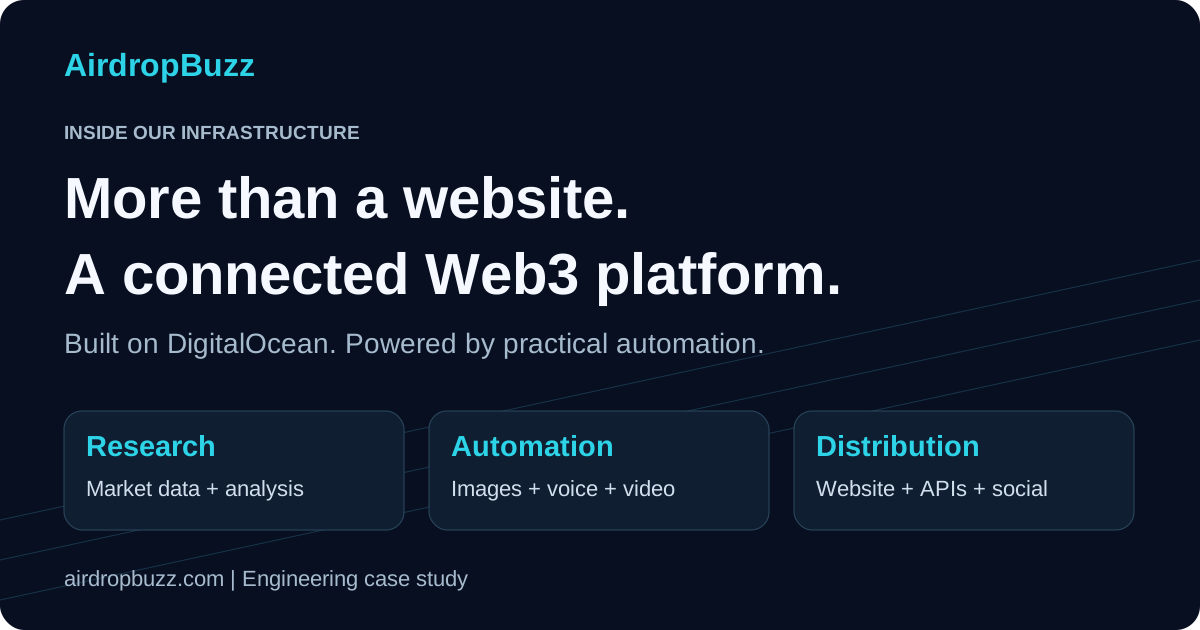
01 / The foundation
A crypto platform needs more than a website that loads.
Campaigns change. Claim windows close. Market conditions shift. Community members expect timely updates, while developers and AI assistants increasingly want structured access to the same information.
At AirdropBuzz, we use DigitalOcean as the infrastructure foundation connecting these workflows. Our implementation combines a PHP website, a MySQL database, Node.js services, Python diagnostics, local speech generation and scheduled background jobs.
DigitalOcean provides the server environment; our application supplies the research logic, publishing rules and user experience. DigitalOcean Droplets are Linux-based virtual machines, which let us run the software our workflows need.
The production stack checked for this article uses Ubuntu, Nginx, PHP-FPM and MySQL. Node.js supports integrations and the remote Model Context Protocol service. It is a self-managed deployment; see the evidence and scope limitations below.
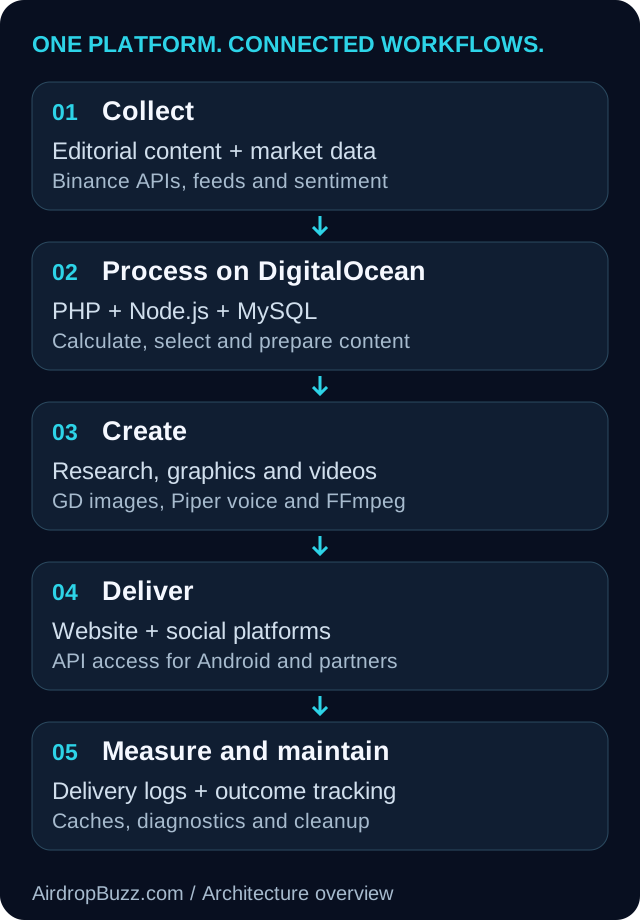
Hosting the research experience
The application serves airdrop guides, campaign updates, news, articles, Insights and Market Pulse. The same environment hosts the user dashboard and the administrative tools used to manage content and inspect delivery results.
Our Opportunity Scoreboard organizes campaign research, while the homepage highlights opportunities, deadlines and recent changes. Task planning, risk-checking utilities, calculators and gas estimates sit alongside that content.
Infrastructure keeps those features available. Their value still depends on accurate data and responsible editorial decisions: a fast page is not enough if it describes an expired campaign as active.
02 / Data becomes research
Market Pulse and Insights: two different jobs.
Market Pulse
Every 2 hours
Short market context from price, volume, completed candles, higher-timeframe trends and available open-interest data.
Explore Market Pulse →Market Reality Check
Two daily publishing windows
Deeper Insights comparing price movement with participation, order flow, persistence and visible liquidity.
Read Insights →From Binance data to a Market Pulse post
The scheduled job rotates through configured tokens and retrieves Binance prices, trading volume and completed candlestick data. Four-hour and daily trend context, chart candles and futures open-interest history supplement the snapshot where available.
PHP calculates the market context, then a rule-based presentation layer creates the headline, explanation and relevant levels. PHP GD renders the accompanying chart graphic.
- Collect data and calculate context.
- Prepare the post and generate its image.
- Publish on Binance Square.
- Save the website copy, publication references and history.
- Attempt eligible downstream distribution.
A separate hourly job checks subsequent prices after 2, 4, 12 and 24 hours for directional follow-through reporting. Its interpretation is explained in Limitations.
Going deeper with automated Insights
The Reality Check pipeline asks whether the activity underneath a price move supports the headline. It screens liquid USDT markets, compares volume and trade counts with their baselines, examines aggressive flow and directional persistence, and evaluates spreads and visible depth.
Current eligibility rules include at least $15 million in 24-hour quote volume, a minimum 0.8% absolute price move and sufficient complete data. The shortlist is capped at 18 candidates; up to 3 finalists receive additional depth checks. A seven-day token cooldown normally avoids covering the same market repeatedly. A dated screening example appears in the sample data.
The system chooses an eligible topic, writes a longer analysis and generates a cover. A Node.js helper publishes to Binance Square. PHP then builds the website Insight with formatted HTML, a title, meta description, cover description and related links. An existing token/topic slug can be updated rather than creating another URL.
The cron checks every 15 minutes for the 1:45 PM and 7:45 PM IST windows, with a grace period. If no market qualifies, it skips the article. It does not generate entries, stops or target-based trading plans.
03 / Content becomes media
Rendering narrated YouTube Shorts on the server.
Our video workload selects eligible website content, prepares a spoken script, generates narration and assembles the final Short. It runs as a separate pipeline from text-and-image publishing.
- Select and prepare: PHP resolves the source text, cleans it for speech and adds category context.
- Generate voice: Piper uses a local ONNX voice model.
- Time captions: FFprobe measures media duration; ASS subtitles provide captions and word highlighting.
- Render: PHP GD and FFmpeg combine branded visuals, imagery or video, narration, subtitles and background music.
- Upload: OAuth and the YouTube Data API handle authenticated publication.
- Record and clean up: delivery records remain while successful-upload cleanup removes generated delivery artifacts.
Reusable source media is preserved, including videos intentionally embedded in articles. The scheduler checks every 15 minutes, but content slots, eligibility, previous delivery and API availability determine whether an upload happens.
Running voice generation and video rendering locally gives us control over the process. It also makes CPU usage, storage and concurrent jobs important operational concerns.
04 / Reach readers where they are
Community updates, news and daily sentiment.
Telegram
The Telegram job checks every four hours for new airdrops and meaningful campaign changes. Posts can include a cover and relevant links. Successful delivery keys and campaign cooldowns help prevent repetition. Admins can preview an eligible item, override its cover and manually publish it.
Lens/Hey and Nostr
Separate jobs check eligible website content, maintain delivery history and apply their publishing rules. These jobs do not send every item merely because a timer fired. Market Pulse also has its own Nostr check, with a six-hour interval and a four-post daily limit, separate from the general content publisher.
Binance crypto news
An hourly process screens news feeds for fresh, relevant crypto stories. Eligibility and duplicate controls run before the publication attempt. This pipeline is separate from Market Pulse and Reality Check.
Crypto Sentiment Check
A daily collection job caches Reddit crypto sentiment. A following job prepares an eligible topic, a graphic and platform-specific publication variants. The sequence is: collect, cache, select, create and distribute.
One cached dataset can support a website summary and publishing outputs without making every visitor trigger a new external API request. It also helps manage a limited request allowance. The dated sample below states the available mention, post and subreddit counts without implying complete Reddit coverage.
05 / More ways to use the data
Gas estimates, Android APIs and AI-accessible research.
A cached Gas Fee Tracker
The Gas Fee Tracker refreshes a multi-chain payload every five minutes. Pages read the cache rather than fetching every upstream source independently for each visitor.
The interface distinguishes a chain being inexpensive relative to its usual range from having the lowest estimated dollar cost.
Shared data for Android and partners
DigitalOcean hosts our backend APIs, including the Android integration. The website and app can draw from shared content instead of maintaining separate editorial databases.
Our restricted read-only partner pilot provides permitted airdrop, update and news data with endpoint-specific access, expiring credentials, request limits, restricted fields, canonical links and attribution. Its credential class is separate from existing Android access. Explore API access.
Model Context Protocol
The remote MCP service exposes structured retrieval tools for supported AI clients, including public discovery and protected content access. Canonical links help clients identify the original source.
MCP complements the website and APIs as a retrieval interface. Learn about AI agent access.
Operations
Diagnostics, maintenance and the cron schedule.
Python-powered diagnostics analyze access logs to summarize Googlebot-labelled requests, frequently crawled paths and activity associated with the main website and MCP service. A related CSV workflow compares Search Console impressions before and after a chosen event date.
Search Console reporting and sitemap tooling exist in the application. The schedule verified for this case study includes a daily SEO diagnostic-cache refresh; it is not a claim that every Search Console script has a recurring production schedule.
A baseline checker runs every thirty minutes to record selected endpoint responses and timings. Other jobs convert images to WebP and import YouTube video information. Delivery logs give admins a place to inspect outcomes rather than assume a scheduled run succeeded.
What our cron jobs actually check
This production schedule was checked on September 5, 2026. Frequencies describe checks, not guaranteed publications. Jobs may skip because no eligible content exists, a cooldown applies, a window is not due or a dependency fails.
| Workload | Check frequency | Purpose |
|---|---|---|
| Market Pulse generation | Every 2 hours | One eligible short market post per run |
| Market Reality Check / Insights | Every 15 minutes | Publishing windows: 1:45 PM and 7:45 PM IST |
| Market Pulse outcomes | Hourly | Check matured 2h, 4h, 12h and 24h observations |
| YouTube Shorts | Every 15 minutes | Check configured content slots and eligibility |
| YouTube video import | Daily | Import video information |
| Telegram updates | Every 4 hours | Check new campaigns and meaningful updates |
| Lens/Hey distribution | Hourly | Check eligible website content |
| General Nostr distribution | Every 4 hours | Check eligible website content |
| Binance crypto news | Hourly | Screen fresh stories before publishing |
| Reddit sentiment collection | Daily | Cache the source dataset |
| Crypto Sentiment Check | Daily, after collection | Prepare the graphic and platform variants |
| Gas-fee cache | Every 5 minutes | Refresh estimated chain costs |
| WebP conversion | Every 6 hours | Process image-conversion work |
| Baseline endpoint checks | Every 30 minutes | Record selected HTTP responses and timings |
| SEO diagnostic cache | Daily | Refresh crawl-log summaries |
Technology
The implementation stack.
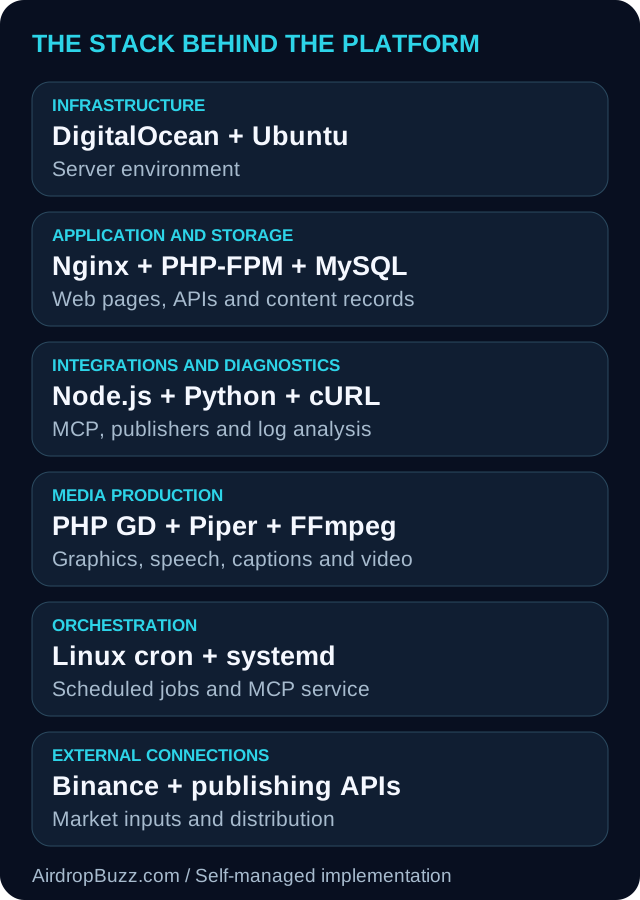
- DigitalOcean and Ubuntu
- Host the application and background workloads.
- Nginx, PHP-FPM and PHP CLI
- Serve web requests and execute scheduled application code.
- MySQL, JSON state and caches
- Store content, delivery records, rotation history and cached outputs.
- Node.js and Python
- Support MCP, publishing integrations and log diagnostics.
- PHP GD, Piper, FFmpeg and FFprobe
- Create graphics, local speech and assembled video; ASS files carry subtitle timing and styling.
- Linux cron and systemd
- Schedule recurring work and manage the remote MCP service.
- External APIs
- Provide market inputs and publishing destinations, including Binance and YouTube.
Evidence, not a performance promise
What readers can check.
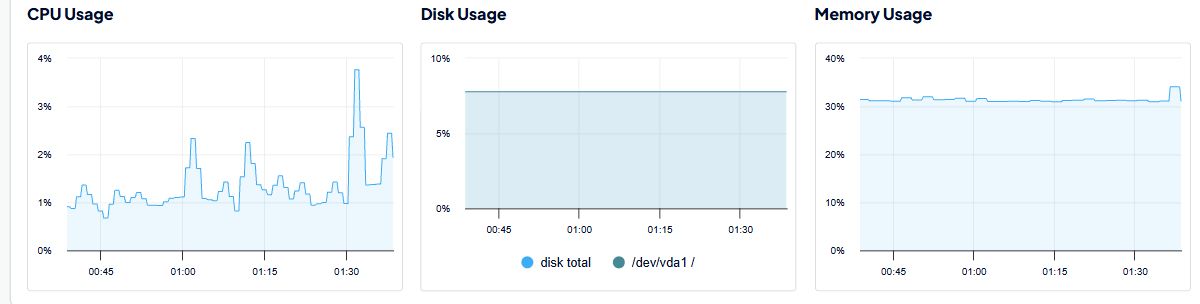
The architecture illustrations above are explanatory diagrams authored for this case study. The screenshot below is a separate capture of the actual DigitalOcean Resource Health panel, cropped to exclude account identifiers, resource selectors, billing and network details.
Timestamped publication examples
- ZEN Market Analysis: Mixed Order Flow — website publication record: . Open the corresponding Binance article.
- FIL Market Pulse — saved publication record: . Open the corresponding Binance post.
Times above come from AirdropBuzz delivery/content records. Binance may display times in your locale and may require its app or a login. External posts can subsequently be edited or removed.
Concrete numbers, with their scope
- Market-screening check
- A read-only check at returned 18 eligible shortlist candidates, hitting the configured cap of 18. This is before recent-token exclusions and full candle/depth scoring. Historical full-funnel counts are not persisted, so we cannot claim a typical pass rate.
- Stored Reddit market-summary snapshot
- Fetched : 69 mentions, 48 unique posts, 7 subreddits and 19 active tickers. These are provider-returned counts for that market-summary payload, not the total provider dataset or a token-level aggregate. The stored payload does not specify its collection window or subreddit names, so neither is asserted here.
Interpretation and boundaries
Limitations.
- Market research
- Follow-through tracking measures direction at fixed horizons; it is not a full strategy backtest or evidence of profitability after fees and execution. Quality scores are fixed-rule heuristics, not probabilities of return. Insight selection can skip a window.
- Data coverage
- Sentiment is a provider-defined Reddit sample. Snapshot counts are not historical averages. Gas estimates depend on the transaction and network conditions at submission.
- SEO and AI retrieval
- Before/after correlation cannot establish a traffic-drop cause. Googlebot-labelled logs require bot verification for attribution. MCP access does not guarantee rankings or AI recommendations.
- Infrastructure and delivery
- This off-chain service does not validate a blockchain or establish campaign legitimacy. Managed Databases, Kubernetes, Spaces, automatic scaling and automatic failover are not verified components of this deployment. Shared server resources and external APIs can limit availability; duplicate protection varies between pipelines.
Lessons for Web3 builders
What it enables is a coordinated operating model: one content source serves several interfaces, market data becomes explainable research, repetitive media tasks run on schedules, partners receive controlled access, and previous observations can be measured afterward.
The engineering work does not end at deployment.
One next priority is separating website publication from Binance delivery. Today, a Binance failure can prevent the website copy from being saved; Binance success followed by a website-save failure needs reconciliation without reposting the same item.
Other priorities include isolating heavy workers, improving failure alerts, testing recovery procedures and reviewing runtime support and resource usage. Those are operational responsibilities, not automatic benefits of cloud hosting.
The lesson: choose infrastructure for the whole product workflow, then make the automation measurable, explainable and honest about its limits.
Dated case-study changelog
- v1.1 · September 6, 2026 (IST): added a cropped DigitalOcean monitoring screenshot, dated publication and data examples, an AI-role disclosure and consolidated limitations. Moved commercial CTAs below the technical narrative and shortened navigation. No production automation was changed for this revision.
- v1.0 · September 5, 2026: published the first case study with architecture and stack diagrams, the inspected cron schedule, standalone metadata and Article schema.
This changelog records versions of this article, not invented historical deployment dates. Earlier integration launch dates have not been reconstructed.
Commercial links & implementation support
Build your own workflow.
This optional commercial section is separate from the technical case study above. Interested in a similar setup for your crypto project, research platform or publishing business? Talk to the AirdropBuzz team about hosting, API integrations, scheduled publishing, media automation and operational dashboards.
Tell us what you want to automate, which platforms you use and your expected workload. We can discuss feasibility, scope and implementation support. Please do not send passwords or API keys in your first message.
Explore DigitalOcean
Referral link: AirdropBuzz may receive credit if you sign up and meet qualifying requirements. DigitalOcean sets its pricing, eligibility and offer terms. Infrastructure charges and implementation support are separate.
Join DigitalOcean
Prefer to start with the infrastructure? Use our DigitalOcean referral badge. We may earn qualifying referral credit. Platform charges and any implementation work are separate.