Nodes & GPU Rewards: Understand the Running Costs
Follow node participation from network context to current guides, separating browser points, operating costs and planned GPU opportunities.
Why follow this series?
Follow the order to build a decision, not a collection of accounts. Read each editorial note before opening the linked guide.Dhiraj Dixit
What you will take away
- Compare bandwidth, uptime and compute commitments
- Separate free software entry from optional hardware or staking
- Distinguish network plans from currently available tasks
Before you start
- A device you control and an understanding of software permissions. GPU participation requires a separate hardware and electricity budget.
Educational research, not financial advice or a safety endorsement. Points, pools and displayed balances do not guarantee a personal payout. Verify current terms before acting.
From understanding to action.
-
Read the network, then the current guide
Historical context and practical participation serve different purposes.
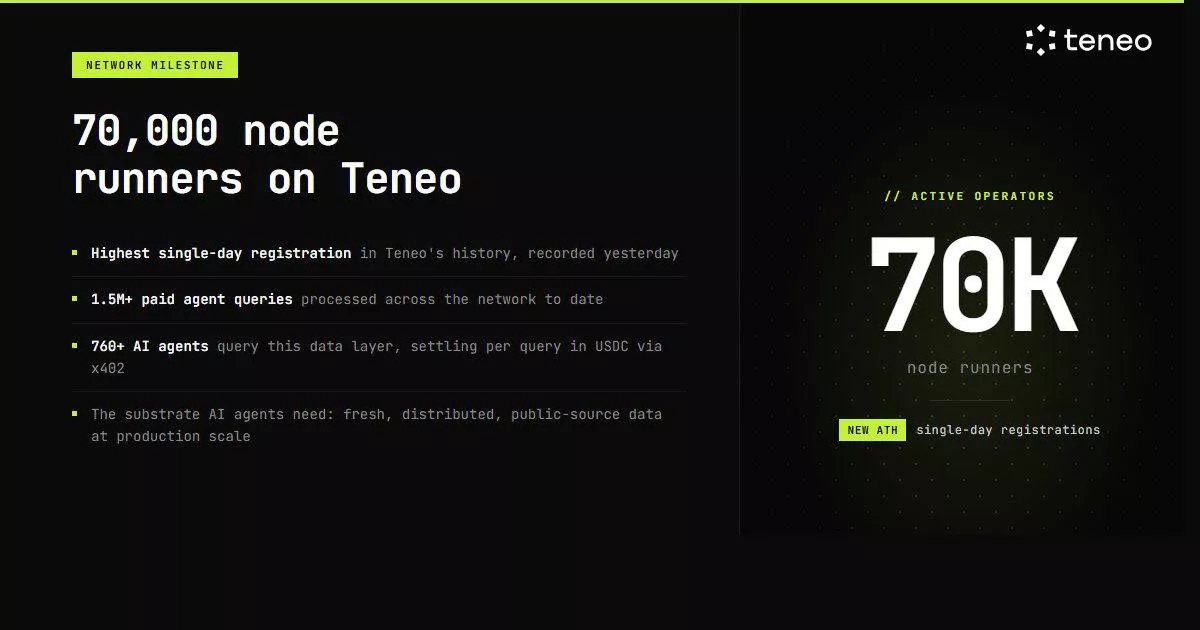
01Teneo Beacon Hits 70,000 Node Runners as AI Data Network Sees Record Growth
Teneo Beacon has reached 70,000 node runners after its highest single-day registration ever. Here is why the milestone matters for AI agents, x402 payments, and decentralized data.
Use the node-growth story as background; the next guide is the source for recorded participation steps.
-
02
Teneo Season 4 Airdrop: Farm Beacon Rewards Faster
Teneo Season 3 is over, and Season 4 is the next round for Beacon runners. The core play has not changed: keep a real Beacon online, claim and boost on schedule, finish Hub quests, and make sure your wallet and X account
Inspect the current Beacon and Season 4 requirements. The guide says the Season 4 end is TBA; do not infer it from an older stored deadline.
Rewards are not guaranteed. Check current tasks, costs and eligibility.
Editorial potential: 82/100, not a safety rating -
Compare operating models
Keep free entry separate from capital-dependent extras.
03DAWN Airdrop Guide 2026: USD.infra Vault & Points
Farm DAWN points with the Validator Extension and track the USD.infra Vault, live since Sept. 22 on Solana. $DAWN snapshot, TGE and conversion remain TBA.
Separate Validator Extension points from optional Black Box hardware and USD.infra Vault capital exposure.
Rewards are not guaranteed. Check current tasks, costs and eligibility.
Editorial potential: 84/100, not a safety rating -
04
DataHive Airdrop Guide 2026: $DATA Points & SOL Staking
DataHive is no longer just an unconfirmed points farm. Its official staking page says SOL stakers can receive a $DATA airdrop, and the project states that staking points directly contribute to future token allocation. Th
Distinguish the free extension/app route from SOL staking; free-user allocation and claim dates remain separate questions.
Rewards are not guaranteed. Check current tasks, costs and eligibility.
Editorial potential: 80/100, not a safety rating -
Advanced watchlist: compute is not free
These are cost and planning references, not invitations to spend.
05How to Mine HashCats and Similar Crypto Projects Without Buying a GPU
Learn how to mine HashCats and similar browser proof-of-work crypto projects using GPUs from Vast.ai or Clore.ai, including RTX 4090 and RTX 5090 setup steps.
Read the GPU rental workflow to understand operating expenses, not as a recommendation to rent a machine.
-
06
FLOP Network Airdrop: Miner Rewards and Testnet Guide
FLOP Network is a promising AI-compute airdrop to watch, particularly for users with GPUs. Its official draft documentation confirms a 1.2 billion $FLOP miner allocation, with 25% liquid at genesis and the remaining 75%
FLOP is a planned GPU opportunity with draft terms; hardware, electricity, demand and the network opening all need checking.
Rewards are not guaranteed. Check current tasks, costs and eligibility.
Editorial potential: 81/100, not a safety rating



Your next informed step
Estimate device power, bandwidth, maintenance and any rental costs before running software. Do not buy hardware or pay a deposit solely because a future token allocation is mentioned.
Questions about this journey
Is a free node programme free to operate?
Not necessarily. A free signup or extension can still use electricity, bandwidth, device uptime and attention. Optional hardware, staking and vault products have additional costs or risks.
Can I treat FLOP as an already-open miner airdrop?
No. The guide describes draft allocations and a planned testnet/mainnet timeline. Verify an official opening and current requirements before installing software or committing hardware.