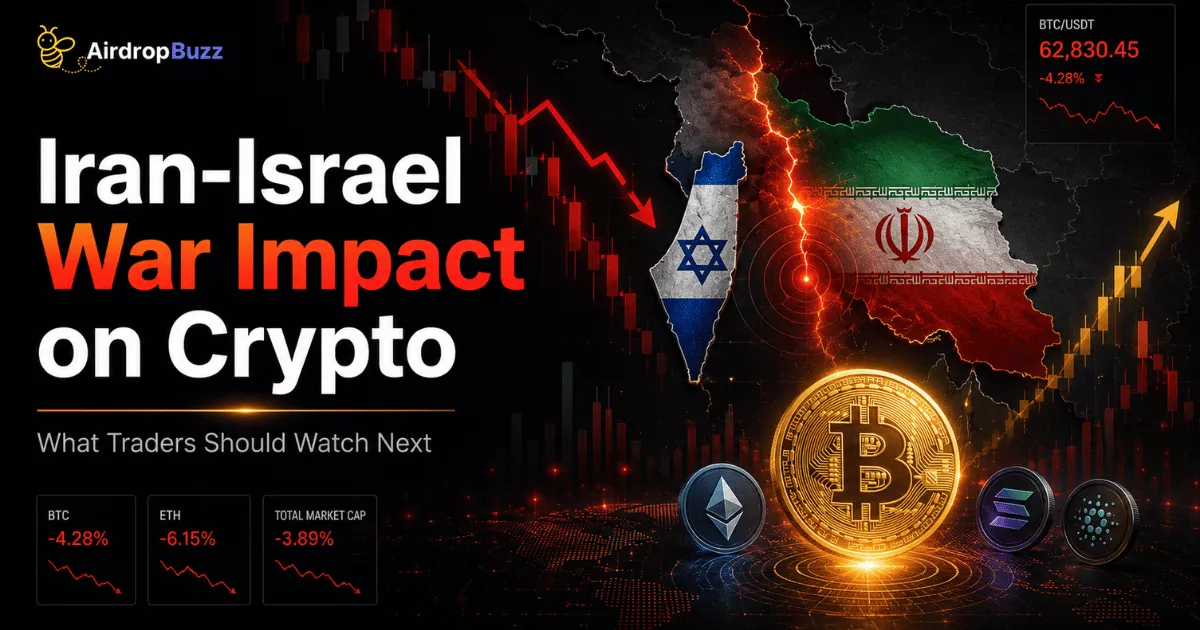
TL;DR / Key Takeaways
- Iran-Israel war tensions may keep crypto markets volatile.
- Bitcoin could fall first if investors move away from risky assets.
- A de-escalation may trigger a short-term relief rally in BTC and ETH.
- Altcoins may face bigger losses than Bitcoin during market fear.
- Oil prices are a key signal for crypto traders right now.
- Rising stablecoin demand may show traders are moving into defensive mode.
- Bitcoin’s safe-haven narrative may strengthen if global uncertainty grows.
- Crypto’s next move depends on war headlines, oil prices, liquidity and the U.S. dollar.
On this page Jump straight to the sections you need Built for mobile reading and quick skimming.
The Iran-Israel war has put crypto traders on high alert. Bitcoin, Ethereum and major altcoins are now reacting to war headlines, oil prices and global market fear.
Crypto markets are already sensitive to inflation, interest rates and investor sentiment. A major conflict in the Middle East adds another layer of uncertainty. In the coming days, traders may see sharp price swings across Bitcoin, Ethereum, Solana, meme coins and smaller altcoins.
The key question is simple: will the conflict push investors away from risky assets, or will Bitcoin benefit from its safe-haven narrative?
Why the Iran-Israel War Matters for Crypto
Crypto does not trade in isolation anymore. Bitcoin is now part of the wider global risk market. When stocks fall, oil jumps or the U.S. dollar strengthens, crypto often reacts quickly.
During war or geopolitical tension, investors usually reduce exposure to risky assets. This can hurt Bitcoin and Ethereum in the short term. Altcoins can face even stronger selling because they are more volatile and less liquid.
At the same time, some investors still view Bitcoin as a hedge against government risk, currency weakness and global instability. This creates a mixed setup for the crypto market.
That means Bitcoin may first drop with risk assets, then recover later if traders start treating it as digital gold.
Bitcoin Price Outlook During Iran-Israel Tensions
Bitcoin will likely remain the main crypto asset to watch. If the Iran-Israel war escalates, BTC could face more selling pressure as traders move toward cash, stablecoins or safer assets.
A fresh round of attacks, rising oil prices or stronger U.S. dollar demand could pull Bitcoin lower. In that situation, leveraged traders may face liquidations, which can make the decline sharper.
However, if tensions cool and oil prices stabilize, Bitcoin could see a relief bounce. Traders may return to risk assets if they believe the conflict will not spread into a larger regional war.
For now, Bitcoin’s short-term trend depends heavily on headlines. A calm market could support recovery. A sudden escalation could trigger another sell-off.
Ethereum and Altcoins May See Bigger Price Swings
Ethereum usually follows Bitcoin during major macro events. If Bitcoin weakens, ETH may also struggle. But Ethereum can move more sharply because traders often treat it as a higher-risk asset.
Altcoins may face even more pressure. Tokens linked to meme coins, AI, gaming, DeFi and new narratives could see fast corrections if market fear increases.
This happens because altcoins depend heavily on liquidity. When traders become cautious, they often sell smaller tokens first and move into Bitcoin, stablecoins or cash.
If Bitcoin stabilizes, stronger altcoins may recover first. But if BTC keeps falling, the broader altcoin market could remain under pressure.
Oil Prices Could Decide Crypto’s Next Big Move
Oil is one of the most important signals for crypto traders right now. The Middle East is a key region for global energy supply. Any threat to oil shipping routes can push crude prices higher.
Higher oil prices can increase inflation fears. If inflation stays high, central banks may delay rate cuts or keep financial conditions tight. That is usually negative for crypto and other speculative assets.
On the other hand, falling oil prices could calm markets. If energy prices stabilize, traders may feel more comfortable buying Bitcoin and altcoins again.
This is why crypto investors should not only watch BTC charts. They should also watch oil, the U.S. dollar, gold and stock market futures.
Will Stablecoins Benefit From the War?
Stablecoins may see higher demand if volatility rises. Many traders use USDT, USDC and other dollar-backed assets to protect capital during uncertain periods.
This does not always mean investors are leaving crypto completely. In many cases, they are simply waiting on the sidelines inside the crypto ecosystem.
If stablecoin dominance rises, it may show that traders are cautious. It may also show that there is buying power ready to return once market conditions improve.
Can Bitcoin Become a Safe Haven?
Bitcoin’s safe-haven role is still debated. In theory, Bitcoin should attract demand during geopolitical stress because it is decentralized and not controlled by any single government.
But in practice, Bitcoin often falls during the first stage of market panic. Traders sell what they can sell quickly. Bitcoin trades 24/7, so it becomes one of the first assets to react.
After the first shock, the story can change. If investors worry about fiat currencies, debt, inflation or banking risk, Bitcoin may regain attention as an alternative store of value.
So the answer is not simple. Bitcoin can behave like a risk asset in the short term and a hedge narrative asset in the longer term.
What Crypto Traders Should Watch Next
Crypto traders should watch several key signals in the coming days.
First, watch official updates from Iran and Israel. Any sign of escalation could increase selling pressure across crypto.
Second, watch oil prices. A sharp oil spike could hurt Bitcoin and altcoins by raising inflation fears.
Third, watch the U.S. dollar. A stronger dollar often puts pressure on crypto prices.
Fourth, watch Bitcoin liquidation data. High leverage can turn small price moves into major market drops.
Fifth, watch stablecoin dominance. Rising stablecoin demand may show that traders are moving into defensive mode.
Best-Case Scenario for Crypto
The best-case scenario is a clear reduction in conflict risk. If Iran and Israel avoid further escalation, global markets may calm down.
In that case, Bitcoin could recover first. Ethereum may follow. Large-cap altcoins may also bounce if liquidity improves.
A fall in oil prices and a stable stock market would support this bullish case. Traders may then return to risk assets and rebuild positions.
Worst-Case Scenario for Crypto
The worst-case scenario is a wider regional conflict. If the war spreads or threatens major oil routes, crypto could face a deeper correction.
In that environment, Bitcoin may break lower, Ethereum could underperform and smaller altcoins may see heavy losses.
Leverage would also become dangerous. Sudden war headlines can trigger fast liquidations in futures markets, especially during low-liquidity trading hours.
Final Take: Crypto Faces a Headline-Driven Week
The Iran-Israel war could keep crypto markets volatile in the coming days. Bitcoin may recover if tensions cool, oil prices fall and traders regain confidence.
But another escalation could quickly push the market into risk-off mode. In that case, altcoins may suffer more than Bitcoin, while stablecoins could see stronger demand.
For now, crypto traders should stay careful. The market is not moving only on charts or blockchain news. It is moving on war risk, oil prices, inflation fears and global liquidity.
Bottom line: Bitcoin remains the key crypto asset to watch, but the broader market may stay unstable until the Iran-Israel conflict shows clear signs of cooling.
This article is for informational purposes only and should not be considered financial advice.
FAQs
How will the Iran-Israel war affect crypto?
The Iran-Israel war may increase crypto market volatility. Bitcoin, Ethereum and altcoins could fall if traders reduce risk. If tensions cool, crypto may see a relief bounce.
Will Bitcoin crash because of the Iran-Israel war?
Bitcoin could face short-term pressure if the war escalates. However, a full crash is not guaranteed. BTC’s next move will depend on oil prices, investor sentiment, liquidity and global market reaction.
Can Bitcoin rise during war?
Yes, Bitcoin can rise during geopolitical tension if investors treat it as a hedge. But in the first stage of panic, Bitcoin often falls with other risky assets before finding support.
Are altcoins more risky during the Iran-Israel conflict?
Yes. Altcoins are usually more risky during war-driven market stress. They often fall faster than Bitcoin because they have lower liquidity and higher volatility.
Why do oil prices matter for crypto?
Oil prices matter because higher energy costs can increase inflation fears. If inflation stays high, central banks may keep financial conditions tight, which can pressure crypto prices.
Should crypto traders move to stablecoins?
Some traders use stablecoins during uncertain periods to reduce volatility. Stablecoins can help traders stay inside the crypto market while waiting for clearer price direction.
What should traders watch next?
Traders should watch Iran-Israel war updates, oil prices, the U.S. dollar, Bitcoin support levels, liquidation data and stablecoin dominance.


