TL;DR / Key Takeaways
- Nuclear reactions can create gold; commercial production is a separate claim.
- CERN, Harvard and Berkeley have documented experiments, not a bullion supply.
- Marathon’s model and company announcement have different evidence limits.
- Bitcoin’s scarcity does not guarantee demand or investment returns.
On this page Jump straight to the sections you need Built for mobile reading and quick skimming.
What happens to gold's value if scientists can create it in laboratories? With experiments and new claims emerging from around the world, could Bitcoin become a more attractive alternative?
Lab-made gold is real, but cheap, large-scale production has not been established by the evidence reviewed here. Bitcoin could gain from a stronger digital-scarcity story. That does not make a scientific headline a reliable buying signal.
Last verified: November 20, 2026. The AirdropBuzz Team separates published experiments, company statements and projections below. All images are AI-generated editorial illustrations, not photographs of experiments or evidence of production.
Can Scientists Really Create Gold?
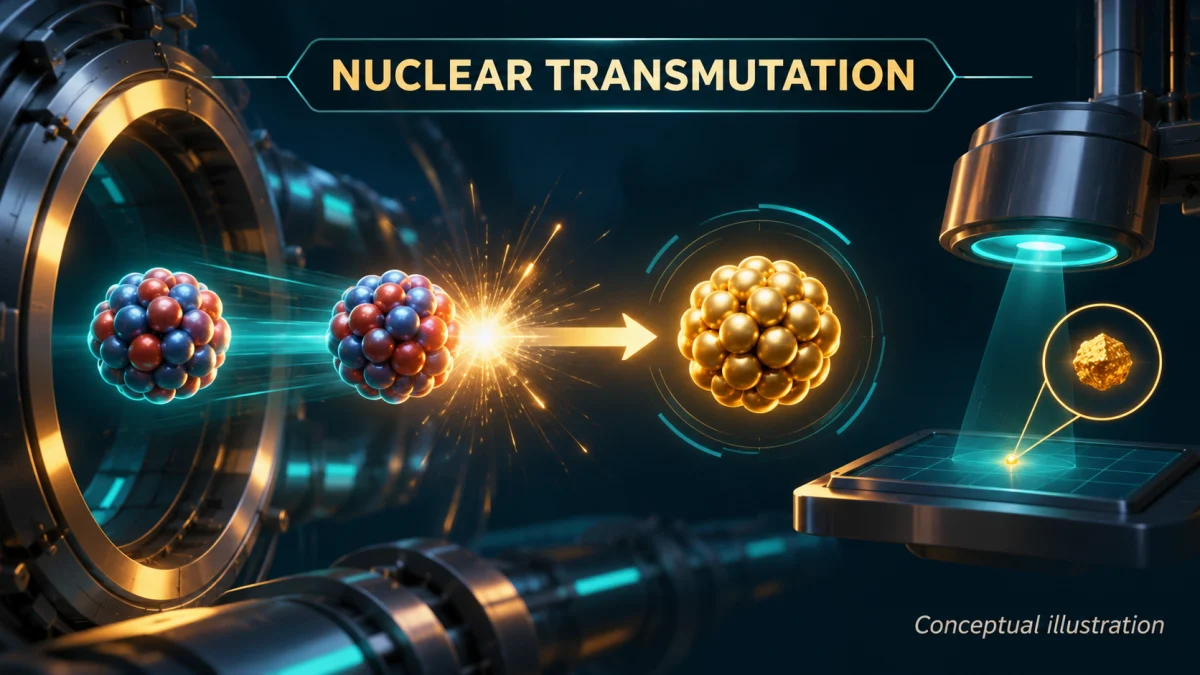
Gold atoms have 79 protons. Nuclear transmutation changes an atomic nucleus, sometimes turning another element into gold. Chemistry alone cannot do this.
Growing a diamond is different: carbon stays carbon while its crystal structure forms. Making gold from mercury or lead requires a nuclear change.
“Gold” also describes several isotopes: atoms with the same proton count but different neutron counts. Some are radioactive and decay; stable gold-197 does not. A successful detection may therefore produce an unstable research isotope rather than a usable metal.
Commercial production faces a harder test: recoverable output, purity, radiation safety and a full cost below the selling price. Equipment, energy, isotope preparation, separation and waste handling all matter.
Where Has Gold Been Produced in Laboratories?
CERN: lead nuclei and a separate isotope facility
CERN spans the Swiss–French border near Geneva. Its May 8, 2025 ALICE announcement describes lead nuclei losing three protons during near-miss interactions. About 86 billion gold nuclei were created across the four major experiments during Run 2, from 2015–2018: just 29 picograms.
Those fast-moving nuclei strike accelerator equipment and break apart almost immediately. They are not gold that a refinery can collect.
Separately, the 2022 ISOLDE paper measured 18 radioactive gold-isotope beams produced by firing 1.4 GeV protons into a uranium target. This is isotope research, not bullion manufacturing.
United States: Harvard and Berkeley
Harvard researchers reported in October 1941 that fast neutrons striking mercury produced three radioactive gold isotopes. The paper is evidence of nuclear conversion, not a claim of profitable jewellery production.
At Lawrence Berkeley Laboratory, a team including Glenn Seaborg studied bismuth fragmentation using carbon and neon beams at the Bevalac accelerator. The paper received in 1980 and published in March 1981 measured gold-isotope yields. It describes trace nuclear products, not a commercial gold output.
Marathon Fusion: an experiment claim and a separate projection
San Francisco-based Marathon Fusion said on October 21, 2026 that it converted mercury into stable gold using fusion neutrons. Treat this as a company-reported experiment. A reproducible yield, full cost and independent validation were not established in this review.
Its separate fusion-blanket study uses simulations. It projects roughly two tonnes per gigawatt of thermal fusion power per year. Mercury-198 becomes mercury-197, which decays into gold-197. That projection is not measured annual factory output.
India, Japan and Germany: keep the caveats attached
A November 16, 2026 report from Bengaluru attributes GNT claims to inventor Rajah Vijay Kumar. Tests reportedly detected gold in treated mercury-compound samples. This review did not independently verify the patent record or a nuclear demonstration. Finding an element does not establish how it formed; contamination controls, isotope measurements and replication remain essential.
Hantaro Nagaoka’s 1925 Nature letter records a Japanese mercury-to-gold claim. Nature’s 1924 discussion of Adolf Miethe’s German experiments explicitly urged caution. These historical claims should not be grouped with modern, documented nuclear measurements.
Compare the method, output and evidence for each example below. “Disputed” denotes an unresolved claim here; it is not an allegation of fraud.
Gold-production evidence reviewed November 20, 2026
| Country | Laboratory/company | Original element | Method | Reported gold quantity | Evidence status | Commercially viable? |
|---|---|---|---|---|---|---|
| Switzerland/France | CERN ALICE | Lead | Electromagnetic dissociation | 29 picograms, Run 2 | Independently documented experiment | No commercial recovery |
| Switzerland | CERN ISOLDE | Uranium target | Proton irradiation; isotope separation | 18 radioactive isotope beams; not a bullion mass | Independently documented experiment | Research only |
| United States | Harvard | Mercury | Fast-neutron reactions | Three radioactive gold isotopes; saleable mass not reported | Independently documented experiment | Not demonstrated |
| United States | Berkeley | Bismuth | Carbon/neon beam fragmentation | Trace isotope yields; no commercial mass reported | Independently documented experiment | Not demonstrated |
| United States | Marathon Fusion | Mercury | Fusion-neutron conversion claim | Recoverable mass not verified | Company-reported experiment | Not demonstrated |
| United States | Marathon Fusion model | Mercury-198 | Proposed fusion blanket | About 2 tonnes/GW thermal/year, projected | Computer simulation/proposal | Not demonstrated |
| India | Kumar/GNT, Bengaluru | Mercury compound, reportedly | Claimed frequency process | Element detection reported; new gold production not independently verified | Historical or disputed claim | Not established |
| Japan | Nagaoka, Tokyo | Mercury | Intense electric fields, claimed | No independently verified quantity established here | Historical or disputed claim | Not established |
| Germany | Miethe, Berlin | Mercury | Electrical discharge, claimed | No independently verified quantity established here | Historical or disputed claim | Not established |
Can Lab-Made Gold Crash Gold Prices?
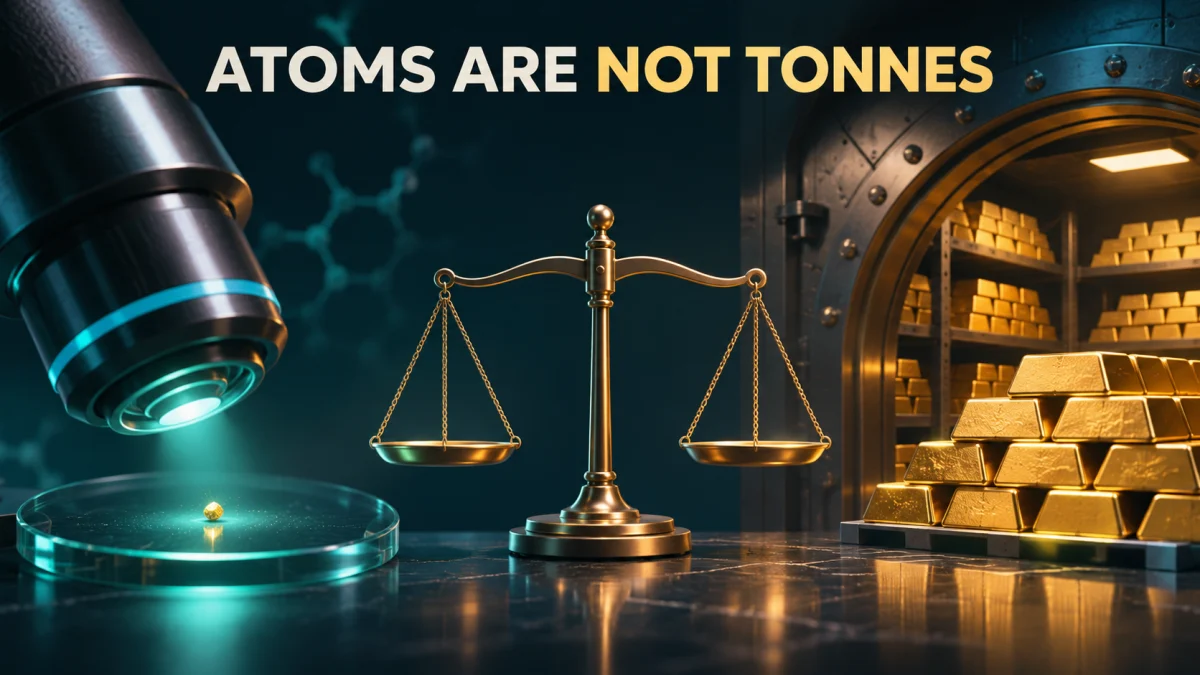
The scale gap is enormous. The World Gold Council estimates 2025 mine production at about 3,672 tonnes, subject to revision. Its separate above-ground stock estimate at the end of Q3 2026 is 224,200 tonnes. These figures cover different periods and measure different things.
For comparison, CERN’s 29 picograms equal 0.000000000029 grams. This is a scientific measurement, not an addition that could move the bullion market.
A future method could matter if it repeatedly delivers substantial, safe, saleable gold at a competitive cost. A patent, a sample assay or a simulation does not settle those conditions.
Production costs must include the whole facility and process, not just feedstock. If output costs more than its market value, scaling it does not create an attractive gold business.
Even a genuine advance would affect prices through expectations, deployment speed and demand. A gold-price decline alone does not identify its cause. Rates, currency moves, investor flows and central-bank demand can change independently of laboratory news.
Bitcoin vs Lab-Made Gold: Which Is Scarcer?
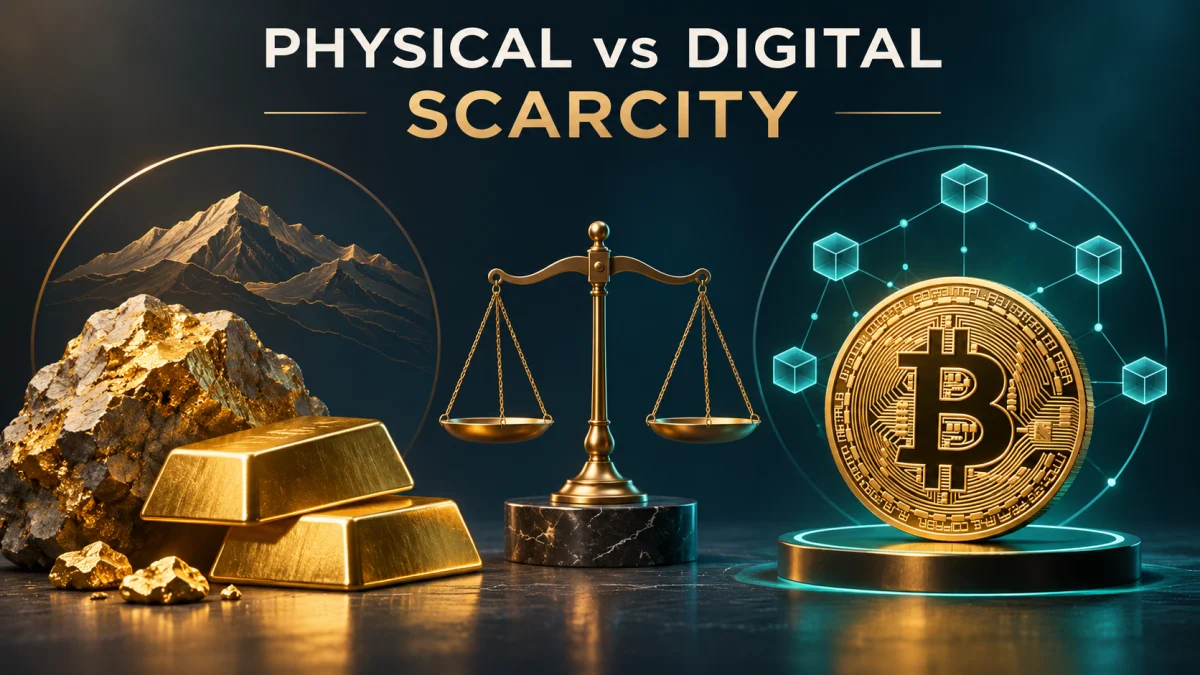
Bitcoin’s issuance rules approach a maximum of 21 million coins. Nodes enforce those rules. Changing them would require adoption of different consensus rules; a developer cannot simply order extra coins into existence.
Making gold does not change Bitcoin’s schedule. Equally, a fixed schedule cannot guarantee demand or a rising price. For how issuance works, see our Bitcoin mining guide.
Scarcity does not remove investment risk
| Factor | Gold, including any future lab supply | Bitcoin |
|---|---|---|
| Supply limit | No fixed monetary cap; economically recoverable supply matters | Approximately 21 million under current consensus rules |
| Production | Mining, recycling and experimental transmutation | Block rewards with declining issuance |
| Scarcity | Physical availability and extraction/production costs | Enforced by network validation and continued adoption |
| Volatility | Market price can rise or fall | Large drawdowns and rapid price swings are possible |
| Key risks | Storage, authenticity, custody and future supply changes | Key loss, custody failures, regulation and market risk |
| Inflation argument | Used as a store of value; no guaranteed short-term hedge | Fixed-supply argument; no guaranteed inflation hedge |
| Access and liquidity | Bars, coins and financial products have different fees | 24/7 spot markets; spreads, access and withdrawal limits vary |
Could Falling Gold Prices Benefit Bitcoin?
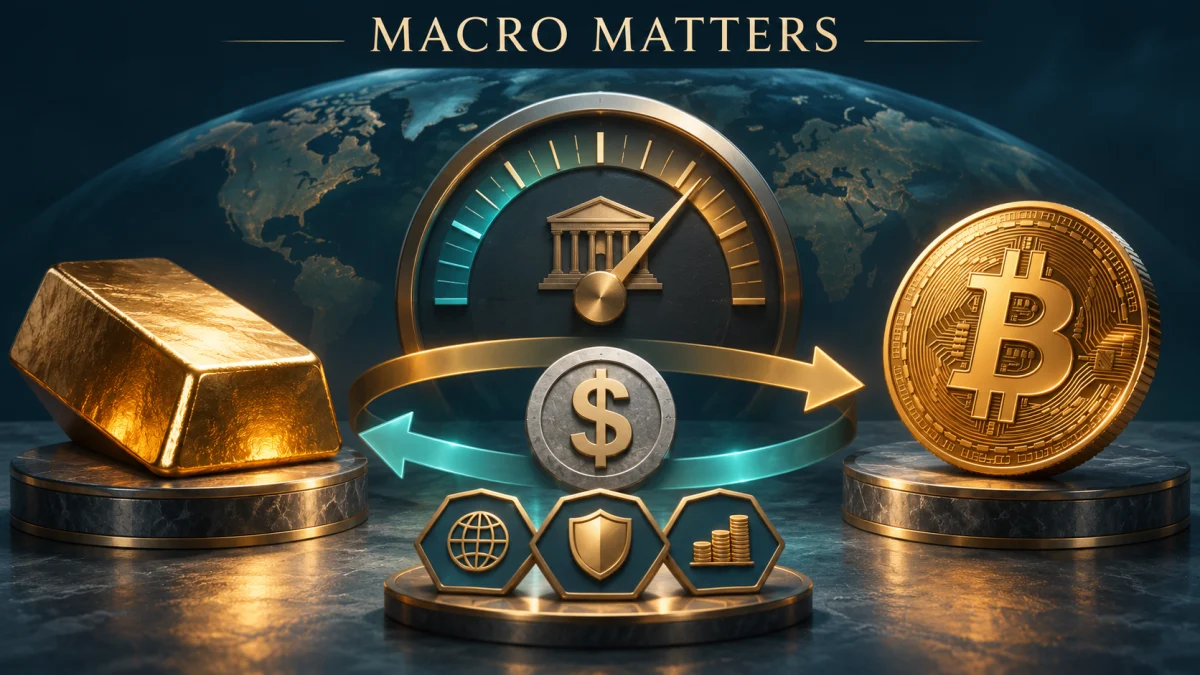
Some investors might prefer Bitcoin if they believe new technology weakens gold’s scarcity. That is a possible capital-rotation story, not a measured effect established by these experiments.
Gold sellers can move into cash, bonds or other assets instead. Buyers of physical jewellery and central-bank reserves do not all have the same mandate as crypto investors.
Both assets can also fall together when investors need cash. Higher real interest rates may make income-producing assets more attractive. A stronger US dollar and reduced appetite for risk can complicate either scarcity narrative.
The AirdropBuzz Team’s assessment: track actual production economics and fund flows before connecting a lab announcement to Bitcoin returns. Scientific progress changes what is possible; markets decide what that possibility is worth.
Is This an Opportunity to Invest in Bitcoin?

- Bullish scenario: credible low-cost gold production emerges, and demand for digitally scarce assets strengthens.
- Neutral scenario: gold research advances slowly and has little impact on available supply. Bitcoin trades on its own adoption and liquidity trends.
- Bearish scenario: risk appetite falls or crypto-specific problems dominate. Bitcoin declines even if the gold narrative changes.
None has an assigned probability here. A long holding period does not remove price, custody or regulatory risk. The SEC’s investor education guidance warns that crypto-related investments can be volatile and lose money.
Dollar-cost averaging means investing a fixed amount at regular intervals. It spreads entry dates; it does not ensure profit or protect against a lasting decline. Waiting while the evidence develops is also a valid choice.
Do not use leverage or money needed for essential expenses to trade this story. Check costs and custody first with our wallet safety guide and crypto safety checklist.
Final Verdict
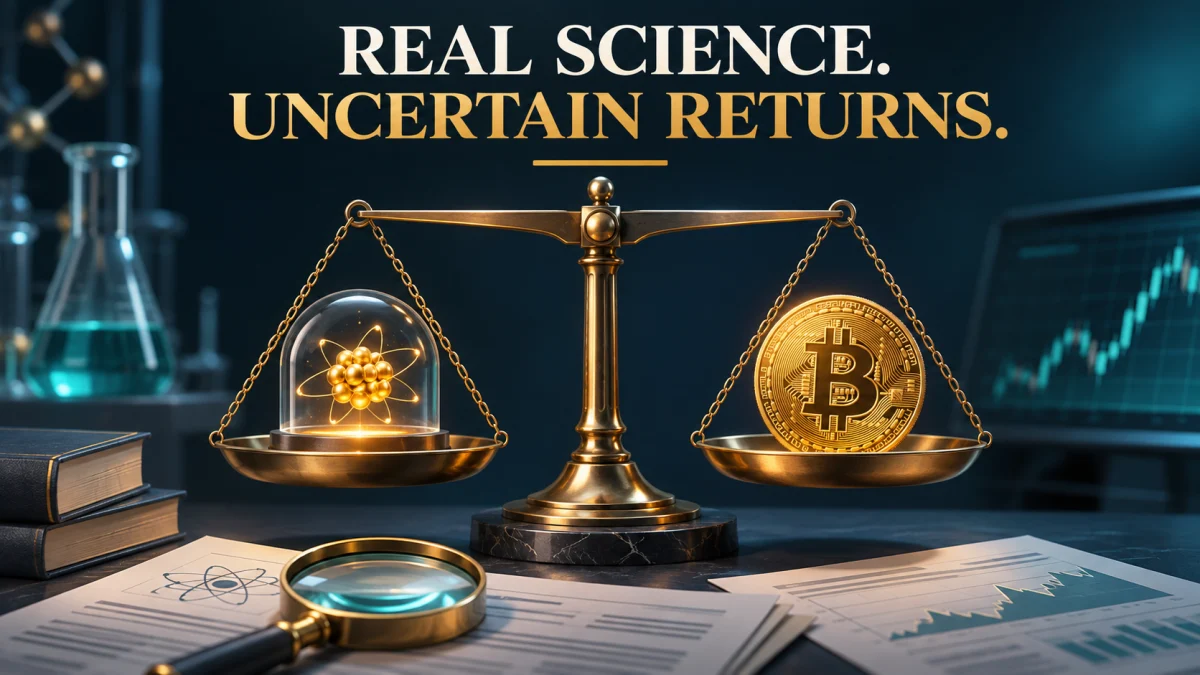
Yes, laboratory gold is real. Published Harvard, Berkeley and CERN experiments document nuclear production. Newer commercial claims need separate checks.
The reviewed evidence does not establish a current commercial threat to global gold supply. Bitcoin might benefit from a changing scarcity narrative over time, but that needs investor demand. It is not a consequence that follows automatically from creating gold atoms.
Before acting on the next headline, ask three questions: how much usable gold, at what full cost, and independently verified by whom?
Frequently Asked Questions (FAQs)

Can gold be manufactured in a laboratory?
Yes. Nuclear reactions can produce gold. Scientific production and an economical source of saleable metal are different achievements.
Which countries have created gold?
Published research documents experiments in the United States and at CERN near the Swiss–French border. Historical Japanese and German claims need different evidence labels.
Is lab-made gold real gold?
An atom with 79 protons is gold. Its isotope determines whether it is stable or radioactive; that distinction affects safe recovery and use.
Can artificial gold become cheaper than mined gold?
Possibly in principle, but this review did not establish commercial production with a fully demonstrated cost below mining or market alternatives.
Will lab-created gold reduce gold prices?
Not necessarily. A meaningful effect would depend on usable quantities, costs, deployment and demand. Tiny experimental yields do not establish such an effect.
Could Bitcoin benefit from lab-made gold?
It could gain narrative appeal if gold becomes less scarce. Investor demand and wider market conditions still determine whether that translates into price gains.
Did CERN produce gold bars?
No. ALICE measured fleeting gold nuclei. They break apart when they hit accelerator structures; they were not collected as bullion.
Does the Marathon Fusion projection prove mass production?
No. Its fusion-blanket study models future output. The company’s separate experimental announcement does not independently establish a commercial production rate.
Verified Sources and Research Scope
Sources checked November 20, 2026 are linked beside the claims they support: CERN and the ISOLDE paper; the Harvard and Berkeley journal records; Marathon’s study and company announcement; historical Nature records; World Gold Council data; Bitcoin documentation; and SEC investor guidance. The Bengaluru discussion relies on attributed reporting, not an independently verified patent or replicated experiment.
Educational analysis, not personalised financial advice. Do your own research. No experiment, deposit, trade or investment return was independently tested by AirdropBuzz for this article.