
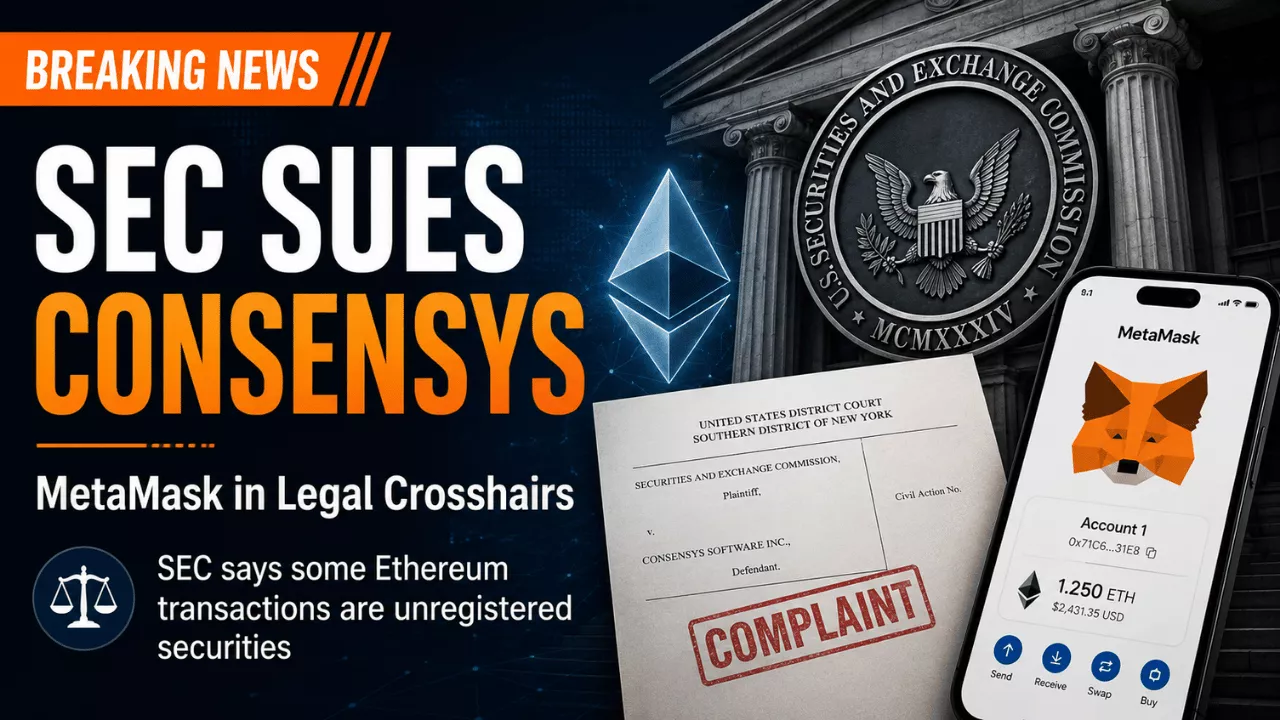


SEC Targets Consensys and MetaMask
The U.S. Securities and Exchange Commission (SEC) has filed lawsuits against blockchain firm Consensys. The legal action, filed on June 4, 2026, focuses on the company's popular MetaMask wallet service.
According to the SEC's complaints, Consensys failed to register as a broker-dealer. The agency alleges that certain Ethereum-based transactions facilitated through MetaSwap, MetaMask's built-in swap feature, involve unregistered securities. The SEC also claims MetaMask's staking service for validators on the Ethereum network violates securities laws.
Ethereum's native token, Ether, is a central part of the case. The SEC argues that staking services, where users lock up their Ether to help secure the network and earn rewards, constitute an investment contract. The lawsuit alleges MetaMask operated as an unregistered securities exchange.
Consensys Response and Legal Context
In a public statement, Consensys said it will vigorously defend itself against the SEC's claims. The company argues its products are non-custodial software tools and not financial services subject to SEC oversight.
This legal action is part of a broader regulatory push. The SEC has previously targeted other major crypto exchanges and service providers with similar claims. The outcome of this case could set a major precedent for how DeFi, or decentralized finance, interfaces are regulated in the United States.
Why This Matters
The lawsuits against Consensys represent a significant escalation in U.S. crypto regulation. A ruling against Consensys could force widespread changes for non-custodial wallets and DeFi front-ends. It directly challenges the operational model of many Web3 projects that rely on user-controlled software. The case will test the boundaries of existing securities law as it applies to decentralized blockchain networks and their associated tools.