
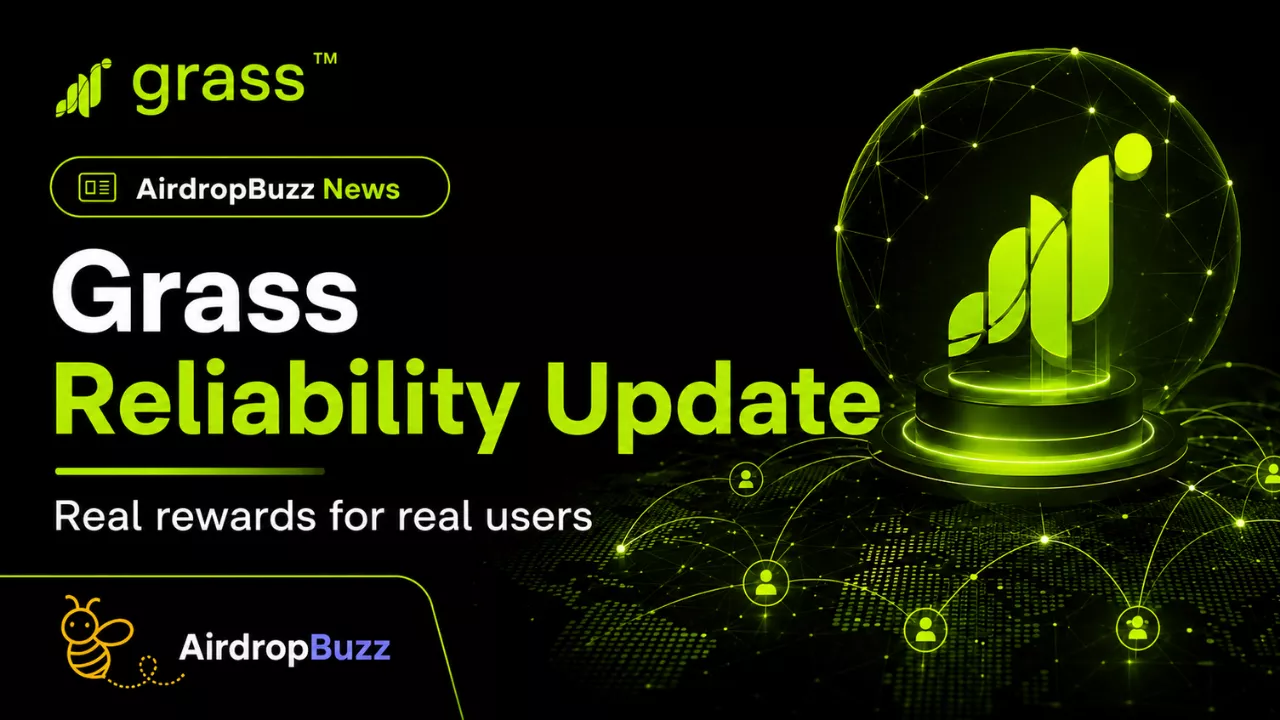


The AirdropBuzz News Desk — Grass, a DePIN project focused on shared internet bandwidth, said its network reliability has improved after new detection and filtering changes removed bots, bad actors, and low-quality nodes. The update was posted by Grass on X and matters because rewards are now tied more closely to real bandwidth use and usable network activity.
DePIN means decentralized physical infrastructure network. In simple terms, Grass lets users share unused internet bandwidth with the network. Grass says verified institutions can use that bandwidth to support online services, while user activity is tracked through Grass Points.
Grass said the latest performance gains came from better systems that detect and filter out poor-quality activity. The team said its goal is to reward real users who support the network with bandwidth the network can actually use.
The project’s official website says Grass Points track user contributions. These points include Uptime Points, which are earned when a device stays connected, and Network Points, which are earned when a user’s bandwidth is actively used for network requests.
Grass also published a points model update on October 8, 2025. The update said the split between Uptime Points and Network Points started in Epoch 11. Grass said Network Points come from a fixed daily pool of 1,000,000 points and are shared based on actual bandwidth used by the network.
The same update said bandwidth use can depend on demand by region, connection stability, and how a connection has been used in prior tasks. Grass also said users do not need to take extra steps beyond keeping their device running and connected to stay eligible for Network Points.
Grass says it does not access users’ private data or personal online activity. Its website says users share unused bandwidth only, and that contributions may help determine Grass Token rewards through future distributions.
For official project information, users should visit the Grass website or app dashboard directly. The AirdropBuzz News Desk does not publish referral links in news reports.
Why This Matters
The update shows Grass is trying to shift rewards toward useful network work, not just raw sign-ups or inactive nodes. That may affect users who run low-quality or unstable connections. It also gives a clearer signal to airdrop participants: real bandwidth use and stable uptime now matter more in how Grass tracks contributions.
Want to know more about the Grass airdrop?
Read the full AirdropBuzz guide for details on Grass Season 2, eligibility updates, and key dates.
Learn More About Grass Airdrop
No comments yet. Be the first reader to add useful context.