
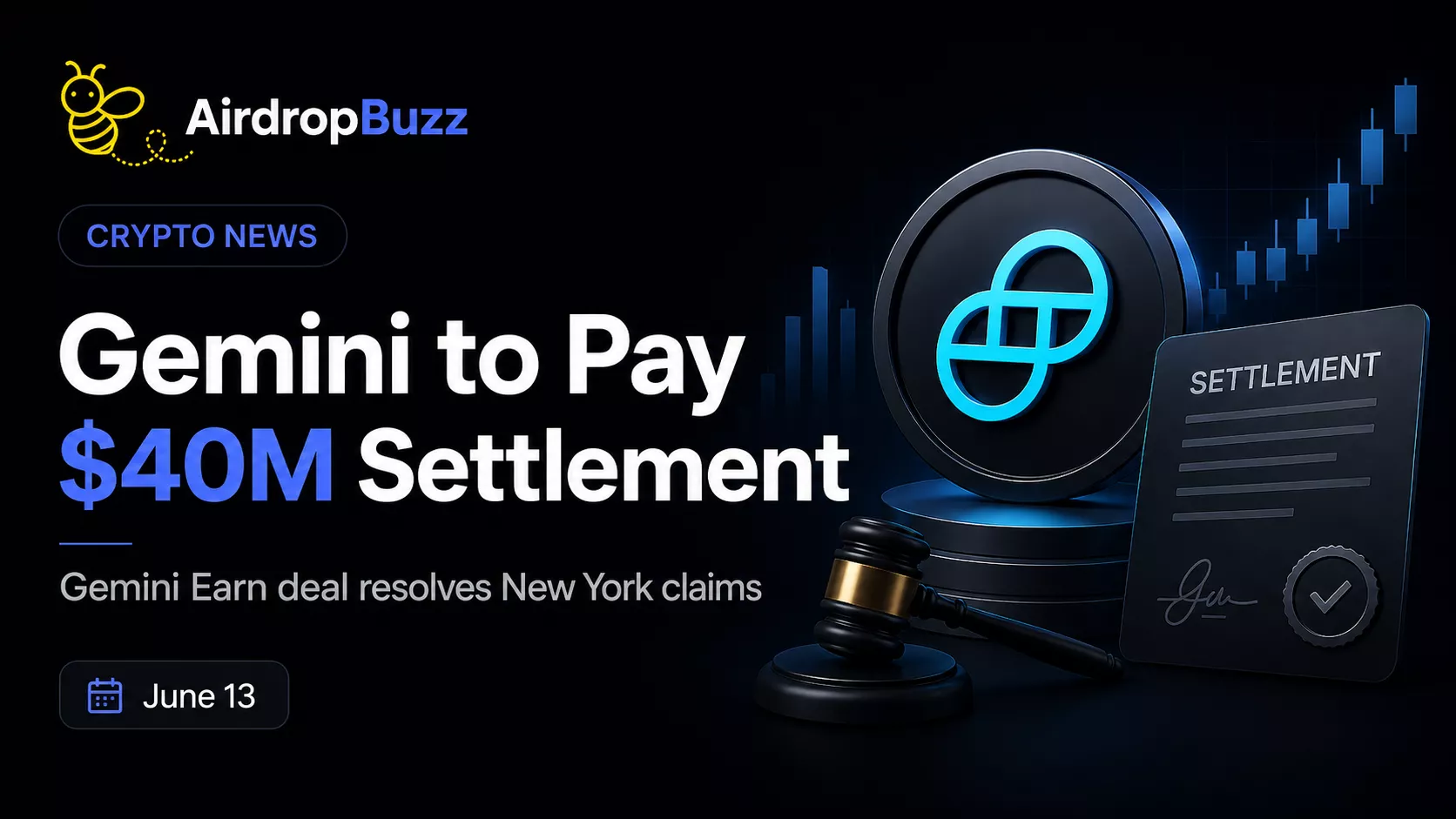


The crypto exchange Gemini will pay $40 million as part of a settlement with New York State. The settlement resolves a lawsuit over the exchange's Gemini Earn lending product. The New York Attorney General's office announced the agreement on Friday, June 13, 2026.
The state alleged that Gemini offered its Earn product to New York residents without proper registration. Earn allowed users to lend their crypto assets to third parties for interest. State regulators claimed this constituted an unregistered securities offering.
The settlement includes a payout of at least $40 million in digital assets. This amount is to be distributed to defrauded investors in New York. The investors are part of a larger group affected by the collapse of Gemini's lending partner, Genesis Global Capital.
"Gemini marketed its Earn program as a safe way for investors to grow their money," said New York Attorney General Letitia James in a statement. "Our investigation found that Gemini failed to conduct due diligence on an unsecured third party."
Background on the Gemini Earn Program
Gemini launched the Earn program in 2021. It allowed users to lend cryptocurrencies like Bitcoin and Ethereum. The loans were facilitated through a partnership with Genesis Global Capital.
Genesis is a crypto lending firm owned by Digital Currency Group (DCG). Genesis paused withdrawals from its lending program in November 2022. This left Earn users unable to access their funds.
The New York lawsuit against Gemini was filed in October 2023. It accused Gemini and its founders, Cameron and Tyler Winklevoss, of fraud. The state sought over $1 billion in restitution for investors.
This new settlement is separate from a related Securities and Exchange Commission (SEC) action. The SEC previously charged both Gemini and Genesis with offering unregistered securities.
Why This Matters
This settlement shows continued regulatory enforcement in the crypto lending sector. State authorities are actively pursuing claims against companies offering yield products. The outcome establishes a financial penalty for operations deemed non-compliant.
For users, it provides a potential path for partial recovery of lost funds. The $40 million distribution is specific to New York-based Earn investors. It highlights the risks associated with third-party lending programs in crypto.
The case also underscores the importance of regulatory registration for financial products. Exchanges operating similar programs may face increased scrutiny on compliance.
No comments yet. Be the first reader to add useful context.